Real Estate

...now browsing by category


How To Find A Good Deal On A Harlem Townhouse

Sunday, March 14th, 2010

Since now is the time to buy if you want a Harlem townhouse I thought I’d go over what some of the things are that you need to know before you buy a place. Being an “educated consumer” is critically important. A LOT of people have been financially devastated by Harlem townhouses - you don’t want to be one of them.

#1 - Realize Harlem Townhouses Are A Speculative Purchase

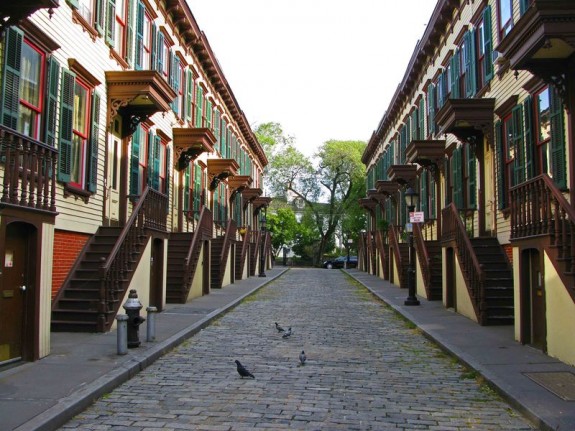
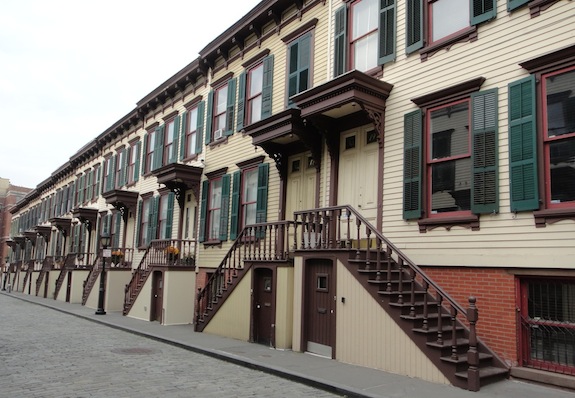
Harlem townhouses were built by speculators in the late 1800s and early 1900s in conjunction with the subways being extended north into Harlem. But then there was a real estate crash starting in 1904 and that speculation came to an end and rents dropped. Harlem townhouses started as speculative investments and 100 years later the cycle of speculation and failure is still going on as is evidenced by the fact that you can buy one for 1/3rd of it’s price 2-3 years ago.

You need to go into it knowing it’s a speculative purchase. While I firmly believe Harlem townhouses will fair far better in the next major downturn (10-20 years from now) there is no guarantee. Harlem is not Brownstone Brooklyn. It’s not “there” yet. It’s only starting to get things that people look for in “good” neighborhoods like great supermarkets and good schools.

There are certain implications to a speculative purchase. Namely you need to watch for the next real estate crash and either get out before it, or be prepared to weather it. If you go into it knowing that time will come, you won’t be so disappointed when it happens.

#2 - Be Very Careful Buying SROs

SROs are “single room occupancy” buildings where people have a room without a proper kitchen. I’ve been reading Sherlock Holmes lately and he lived in an SRO. At one time it was fashionable for single men to live in them - the landlord would serve them meals, etc. Then they just became the least expensive form of housing and the City’s poor gravitated to them. Today SRO tenants often earn $10,000 to $15,000 per year and typically pay 50% of their income to rent these cheapest of cheap rooms. The issue is that when you kick out an SRO tenant they often can’t find other housing and they become homeless.

As a result the City put a moratorium on converting SROs back in 1985 because there was a wave of landlords kicking out their poor tenants, converting to proper apartments and making a bunch of money. A year later they put in place a process whereby you can convert an SRO, but you have to prove that the tenants haven’t been harassed at any point in the past 3 years. To get the signatures required you often have to pay the tenants $10,000 or more, and then the City will take 6-9 months investigating your claim - making sure you didn’t omit anyone who lived in the building, etc. If they approve you, then you get a “certificate of no harassment” which enables you to get a building permit to do the conversion.

The bottom line is that you need to know whether the building you’re considering is an SRO, and if it is you should see a certificate of no harassment before going into contract. Even top brokers lie and tell half truths when they’re selling SROs that don’t have certificates of no harassment. So you need to know how to determine SRO status yourself. There are two primary sources - NYC Department of Buildings (DOB), and NYC Department of Housing Preservation and Development (HPD). HPD has a web site that tells you details about buildings. If the number of “B Units” is greater than zero, then it’s an SRO. Keep track of the Block and Lot numbers that HPD has and then head over to DOB’s BisWeb site. There you enter the block and lot numbers and you can see the information they have on the building. One of the pieces of information is whether the building is SRO restricted. Remember that if any City agency thinks the building is SRO restricted, then it’s SRO restricted, though DOB and HPD are the primary sources of information for SRO restrictions.

DO NOT BUY an SRO without a certificate of no harassment unless you really know what you’re doing.

There are a few cases where buying an SRO without a certificate of no harassment is OK…

First, is if you want to be an SRO landlord. It’s not easy, but it can be profitable. Fully occupied SROs go for $600-$800K. If you have a typical 4 story building with two units per floor, each giving you $650, then you’ve got a rent roll of $5,200. If you can get a mortgage that should more than cover the mortgage payments and expenses. HOWEVER, do watch the taxes - they can be really high on SROs and wipe out any profits. I saw one in East Harlem that paid $25K/year in taxes.

Second, it’s OK to buy an empty SRO if you’re OK with your renovations not being done for 5 years (3 years of waiting + 1 year of review + 1 year of construction). If you can get the current owner to provide a sworn statement that it’s been vacant that can reduce that time frame. You can live in it during that time but you’re only allowed to do “repairs and maintenance”. If you do anything to convert the building you can get fined for it and that violation can make it impossible for you to EVER convert the building. It can even make it difficult or impossible for the next owner to convert the building. In that case you may need to bring the building up to current code as an SRO first, clear the violation, and then reapply for the certificate. That means you pay for renovations twice.

#3 - Look For Realistic Sellers

There are a lot of townhouses on the market right now that are completely unrealistic about their price. Even the ones that have realistic owners typically price their places $200,000 higher than they know they’ll sell for. In our case it was listed for $795K and we purchased it for $530K. Pretty much the only ones that are realistic are estate sales. We got ours from TPE Townhouses Harlem (a part of Tahl Propp Equities). They bought 11 townhouses and didn’t develop them quickly enough and then needed to liquidate them when the market went south. So there are people other than estates who are realistic…

The only way to know if the seller is realistic is to put in a bid. We saw 30 places and put in bids on 7. In one case it was a realistic seller, but we pulled the bid after having second thoughts. In another case it was a short sale and they wanted all cash. The place on Astor Row was looking for people who were bidding based on their gut, not the numbers. In another case there was already an accepted bid and they went with that offer (we later learned that our offer was about $10K less). Given all the bids you’ll be putting in and how much you need the sellers to come down, it’s critical that you have a real estate broker who’s great at bidding aggressively. They need to pull out every trick in the book to get you the price you should pay. If you need a broker with excellent bidding skills, we’d highly recommend Maria McCallister of Barak Realty.

One assumption I made during our search was that eager sellers would list their properties with brokers who would market them aggressively. Right at the end I realized that wasn’t true. Back when the market was hot there were brokers who would get listings and then not market them because they didn’t want to share the commission. (Not every broker in NYC is part of REBNY, which requires co-broking.) Back when Harlem townhouses were so hot you couldn’t help but sell them, it wasn’t a bad strategy. But I had a friend who listed his place in 2008, before the crash, with one of those brokers. She got him into contract for $1.4M, but it fell through. Then the crash happened. A lot of time passed and she got him into contract again, but that one fell through as well. He finally sold the place earlier this year for $775K. By the end he was sorta desperate to sell and was bleeding financially. So those brokers do have motivated sellers and for one reason or another they manage to keep the listing. That particular broker was flat out lying to my friend. She told him she was advertising in the NY Times (she wasn’t). She said she listed his place in the REBNY systems, but our broker confirmed she wasn’t.

That means there is value scouring the web for small real estate companies that have some townhouse listings. Typically they don’t tell you the address or the price and are pretty obscure about other details as well. When you see the properties you need to do things differently. Start by seeing the place on your own and do not mention that you have a broker. Then bring your broker in later after you’ve started initial negotiations. When we wanted to see my friend’s place his broker pulled every trick in the book trying to not get us in before the contract with her buyer was signed. It was only when she realized I was standing there texting everything she did to my friend that she sorta stopped playing tricks.

#4 - The Block & Immediate Neighborhood Can Make A Huge Difference

Real estate values in Harlem vary widely from block to block. We didn’t understand why one townhouse down on 112th was asking so much until very late in the process when we realized how nice it was over in South Harlem (SoHa). Anything close to that goes for a premium. Up in Hamilton Heights you cross Amsterdam Ave and you can go from one of the best blocks anywhere in Harlem to blocks that are pretty sketchy. If you don’t already know Harlem, it can take some time to be able to discern the good areas from the bad.

Before you go into contract on a place go there at night when it’s nice weather and people are out on the street. It’s best to do it a few times to really get a feel for the place. Ask yourself whether you feel safe. If there’s loud music ask yourself how you’ll feel about that when you’re having guests over for a barbecue. Look for possible drug dealing. New York doesn’t really have a gang problem, but look for “rough” groups of kids who might hassle you. But don’t be too critical on that last point. We were going by one property and saw a group of kids outside a building. About 5 minutes as more and more of them arrived and they subsequently left we realized it was Friday night and they were just meeting up to go out clubbing. If they’re standing around laughing an joking chances are they won’t be a problem.

#5 - Get A Property Shark Membership With Comps

One of the best things you can do is get a membership to PropertyShark.com. You can get an incredible amount of information about each of the buildings. You can see tax information, ownership history, pictures, building permits, violations, lis pendens (pre-forclosures), etc.

One of the great things they have is comps search. Not sure what something is worth? Do a 1/4 mile radius search around the building for the past 6 months and you can see what comparable properties are actually selling for (not just their list prices). One trick is to search for all building types but limit the search by square footage. 6,000 or 6,500 square feet max should find the townhouses you’re looking for.

#6 - Realize It’s Usually All About $$/sq. ft.

It’s uncanny how townhouse sales are consistent in terms of price per square foot. HOWEVER, it’s not as easy as you think to calculate the cost per square foot because the DOB has used two different methods to calculate square footage over the years.

First a little terminology… A townhouse “basement” is the floor that’s partly below street level. It’s the “garden apartment” in many cases. Below that level is the “cellar”. Floors that are completely below grade are not included in the square footage of the building (and cannot be used for sleeping). The confusion has come with the basement level which is partly below grade.

When the buildings were first built the basement was used for the kitchen and a bedroom for the cook/maid. Since it wasn’t where the family lived it wasn’t included in the square footage of the building. But we use townhouses differently now and the basement is considered living space, so it is now included. Problem is, the  DOB never went back and recalculated the square footages of buildings calculated the old way. That throws off the calculations of cost per square foot.

The important thing is to be consistent and compare apples to apples. How the square footage is calculated can make a big difference. Let’s say a building has 1,000 sq. ft. per floor and 4 stories including the basement. That means it’s either 3,000  or 4,000 sq. ft. Now, if it sold for $1M then the cost per square foot was either $333 or $250 - a HUGE difference. So you have to be consistent one way or the other. On Property Shark you can see the building’s dimensions and whether it has an extension on the back. If there isn’t an extension then it’s easy to calculate. However sometimes the extension is included in the length of the building and sometimes it isn’t. So there are times when you just can’t tell. If you see a C of O in the past 10 years or so, then you can trust the official square footage of the building and know that it includes the basement.

One other thing to remember is that, unlike apartments, townhouse square footage includes the exterior walls. A considerable amount of the square footage can be walls. For example our place has an exterior dimension of 15′ x 58′ or 870 sq. ft. per floor. The brick walls are about 1′ thick. We share one wall with the townhouse next to us, so brick to brick our square footage is 13.5′ x 56′ or 756 sq. ft. If we did 4 inch studs on all exterior walls that would reduce things further to 12.8′ x 55.3′ or 708 sq. ft. That’s a huge difference from 870 sq. ft - nearly 20% of our square footage is exterior walls.

As you get to know the market you’ll understand the value of buildings and a quick calculation can give you an approximate price. “Why are you asking $400/sq. ft. for a building in poor condition?” can be a fun thing to ask the listing broker… ;)

And one side note - since it is all about price per square foot - if you’re tempted to put in double height ceilings when you do your renovations remember that you’ll be reducing your square footage and devaluing your property.

#7 - Know How Much Renovation Costs

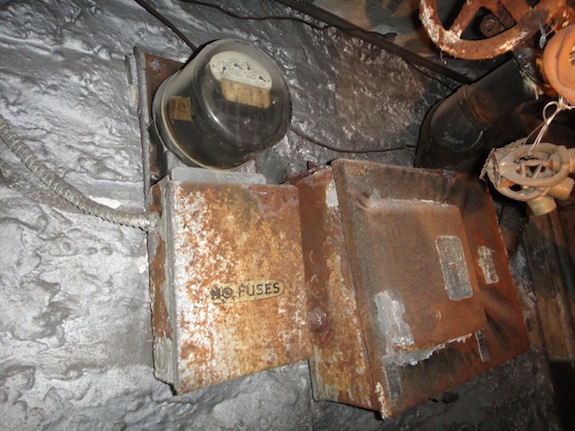
Most of the townhouses in Harlem have 100 year old plumbing and nearly as old electrical systems. Very few of them are properly insulated. Most have rotten floor joists under the bathrooms. That means they all need major work. Never assume otherwise. And replacing things like plumbing, electrical and insulation in an old building requires skilled workers who are able to do their work surgically. Assume plumbing and electric will cost you $150K. If you buy a total shell like ours you’ll be spending at least $150K, probably $200K, just on new structural components. Windows can run you $1K/window for good windows (Harlem townhouses have some HUGE windows - we have one that’s 4 1/2′ x 7 1/2′ and others that are 3 1/2′ x 9′ - the place on Astor Row has a window that’s 5′ x 7′ and on a landmarked exterior where you’re required to use relatively expensive windows).

Then there’s the new building code… In 2008 the City implemented a new building code. The prior building code was from 1968. They didn’t change that much but what they did change can be expensive. For starters more buildings need sprinkler systems - that will run you at least $50K since sprinkler systems have to be done with cast iron pipes that won’t melt in a fire. You’ll also need at least one “handicap adaptable” bathroom per unit. If you’re thinking about an elevator, the minimum size just got a lot bigger. If you’re trying to change your C of O (e.g. converting an SRO) you have to bring it up to code - so all of that may be necessary…

In general, townhouses that look like they’re in pretty good shape will probably need at least $250K in renovation just for new electrical, plumbing, bathrooms and kitchens (though you may be able to defer that cost for a few years). For bigger projects you need to budget $150-200/sq. ft. for a pretty basic job. High end finishes will run you even more. That means a townhouse in poor condition with 4,000 sq. ft. can easily have a renovation that costs $800K. You can do it for less, but you really have to work hard to find a reputable contractor who can do things inexpensively and then you have to scrutinize every line item on the budget and spend countless hours learning about the options for every major system in the building.

And don’t forget all the little costs - the architect will want about 10% of the construction cost. Then you’ll need to budget money to carry the renovation loan during construction. Just those two can easily be $100,000 or more.

Before you bid on a place, conservatively estimate the future value after renovations and then deduct over-estimated renovation costs. The purchase price + renovations should be less than the future value. If it’s not, lower your bid.

Good luck!

The Crazy And Practical Sides Of “Green Architecture”

Friday, March 12th, 2010

Yesterday we went through a townhouse that had been LEED certified (silver certification). Listening to the builder describe what it took to achieve LEED certification was almost comical.

Roof Insulation - The inspector kept telling him the roof insulation fine, they’d close up the ceiling, and then be told it wasn’t OK at which point they had to tear all the sheetrock off the ceiling and fix the problem. How “green” is it to waste that much sheetrock?

Plywood - “Green” plywood costs 3 times more than regular plywood. Isn’t all plywood made of recycled/waste material? I don’t get it…

Green Paint - …is just bad paint. It doesn’t adhere very well and the color doesn’t match properly so you can’t just touch up a problem - you have to repaint the entire wall. How is that “green”?

Dumpster Recycling - Putting the waste material through recycling instead of just sending it to a landfill costs about 40-50% more. That one I sorta understand, though I wouldn’t want to pay for it.

It just seems to me like a lot of LEED certification is just trying to make money on an already expensive product.

There are parts of green architecture that make sense to me - the ones that save you money. Good insulation, energy efficient heating and cooling… But charging 3 times as much for plywood is just crazy.

We’re going to stick to just being energy efficient and leave all the stuff with needlessly inflated prices to the people who seem to have way more money than we do…

Upper End Of Harlem Townhouse Market Is Doing Better

Tuesday, March 9th, 2010

If you own a townhouse in Harlem you’ll be happy to hear that the market has hit bottom and is now starting to go back up. A few months ago I pulled a list of Harlem townhouses that had sold over $1M and the list was pretty short (only 5), the highest price was just under $1.7M and the price per square foot was pretty miserable. PRIME locations like Strivers’ Row were getting in the mid-$300s/sq. ft. and ones that needed significant TLC on decent blocks (like Hamilton Terrace) were selling for just under $300/sq. ft.

Well, if you bought at those prices I think you bought at the bottom of the market. Things are much better now. The number of sales over $1M has doubled to 10 for the past 6 months and at least one of the properties is back over $500/sq. ft.

And here they are…

  • 262 W 139 St (Strivers’ Row) - $1.85M, 3,660 sq. ft., $505/sq. ft., two family with an owner’s triplex over a ground floor rental - This place is ABSOLUTELY IMMACULATE. It was an over the top renovation planned back when you couldn’t help but make money flipping townhouses in Harlem. Things didn’t go very well for the developer/seller, but the new owner has a stunning place to live (with a garage!)
  • 14 W 120 St (Mt. Morris) - $1.385M, $3,37 sq. ft., $456/sq. ft. - 18′ 4 story brick townhouse literally across the street from Marcus Garvey Park. SRO restricted. HPD says it has one class A apartment and 9 class B rooms. For some reason DOB has it classified as 4 family, but is aware it’s SRO restricted.
  • 116 W 120 St - $1.485M, 3,636 sq. ft., $408/sq. ft. - 20′ 4 story painted limestone townhouse. Surprisingly this is an SRO restricted old law tenement. HPD says there is one class A apartment and 6 class be “rooms”. DOB still classifies it as an old law tenement, but doesn’t realize it’s SRO restricted.
  • 7 W 119 St (just outside the Mt. Morris Historic District) - $1.098M, 2,794 sq. ft., $393/sq. ft. - This was a shell and was recently gut renovated with an uneven mix of high end and low end finishes. We went through it. The building is one of the smallest townhouses you’ll see - 14′ x 47′. The rooms in it are TINY and the “back yard” is just a small deck. Our couch wouldn’t come close to fitting in the living room. It’s a technically a 2 family since there’s a VERY small studio apartment in the front half of the ground floor. I have no clue how they’ll rent such a small space. It should have been made into a single family. In my opinion the buyer over paid, but that’s a good sign as far as the market goes.
  • 106 W 118 St - $1.275M, 3,400 sq. ft., $375/sq. ft. - 17′ x 49′ 4 story brownstone. It’s a legal 3 family, that was converted about 10 years ago.
  • 15 W 122 St (Mt. Morris) - $1.375, 4,180 sq. ft., $328/sq. ft. - 18′ x 53′ 4 story brownstone. This is technically an SRO. HPD shows it having one class A apartment and 8 class B rooms. However, DOB shows it has being an SRO-restricted 2 family.
  • 590 W 152 St - $1.2M, 3,744 sq. ft., $320/sq. ft. - 16′ x 52′ 4 story limestone townhouse with a C1 commercial overlay on it’s zoning. Like the last one, HPD shows it having one class A apartment and 8 class B rooms. However, DOB shows it has being an SRO-restricted 2 family.
  • 76 Edgecombe Ave - $1.436M, 4,611 sq. ft., $311/sq. ft. - This is a lovely 19′ brick townhouse on a corner lot. There would be incredible light in the building since the long wall faces south (too much for my tastes, but I know others like southern exposures). It’s a completely legal 4 family with no SRO restrictions.
  • 226 Lenox Ave (Mt. Morris) - $1.25M, 4,932 sq. ft., $253/sq. ft. - A very grand 20′ brick townhouse that was a former funeral parlor. Curiously this is technically a rooming house with no apparent SRO restrictions - somehow with the funeral parlor in there they avoided SRO status. In addition to the funeral parlor there are 2 class A apartments.
  • 146 W 136 St - $1.1M, 4,590 sq. ft., $239/sq. ft. - 17′ x 56′ 4 story townhouse. It shows as 3 family, but DOB is still showing it as SRO-restricted (probably an error). The new C of O was just issued a year ago, so this is newly renovated. This was an incredible deal. The weird part is I can’t find any record of it having been for sale, so there has to be more to this than you can see at first glance.

So there you have it - the top sales for the past 6 months for Harlem townhouses. Considering that just about every week a townhouse will sell in Brooklyn for over $2M, that’s sorta a sad lot by comparison, but at least things are better than they were a few months ago.

Where things are selling…

It’s also interesting to note that none of the sales were in Hamilton Heights / Sugar Hill. 6 of the 10 were south of 125th in and around the Mt. Morris Historic District. Given that our place is in the same area the good news is that we’ll have no problem with the future value appraisal for our rehab loan. It would seem our place will be worth about $400/sq. ft. when it’s completed.

Prices on shells will go up too…

That brings up another point… The sum total of all of these numbers is that when the top end of the market goes up, everyone goes up.  Let’s take our case. When we were bidding I was thinking our place would be worth maybe $325-350/sq. ft. when it was done. So if we put $150-200/sq. ft. into it I had to subtract that from the finished value for things to make sense. We bought at $122/sq. ft. so we’d be safe no matter how you looked at it (provided the market didn’t continue to go down). Now that the top number is $400/sq. ft. things are significantly better.

I still think the biggest risk are the ones in the middle that need more work than you might think. It’s still easy to over pay for those properties. The best bets are shells and ones that are recently renovated.

Buy now! Buy low!

Unless there’s more economic turbulence, I’m firmly convinced now is the time to buy a Harlem townhouse. The trick is finding one in a decent area, without SRO issues, where they’ll sell low.

Not So Glamorous Pics Of Our Townhouse

Saturday, March 6th, 2010

Dan took a few more pictures yesterday when we were at the house. There are beautiful aspects to the place, but with all the melting snow somehow the sewer had backed up into the house and it smelled of shit yesterday. It’s completely fixable, but not so inspiring…

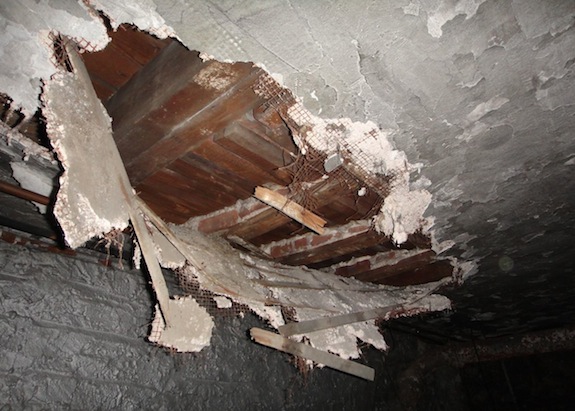
Here’s one picture looking back to front in the cellar…

Run down cellar in a townhouse shell

And we climbed up a ladder, through some rickety floor joists and into the back yard for the first time. It was pretty much what we could see from 122nd Street though we saw the bottom floor for the first time. I can’t believe some moron cut a huge hole in the brick wall to put an air conditioner in. There isn’t even a steel lintel to hold up the weight of the brick above. Needless to say that’s gotta be patched. And there’s about 1 foot of construction debris all over the back yard which will need to be removed. Unfortunately masonry debris tends to be basic and plants like acidic soil, so once that’s out and cleaned up we’ll need to bring in a lot of fresh topsoil and wood chips to get the soil back to being acidic. There was very nice light in the back yard - quite sunny…

Back yard at a Harlem townhouse shell

The yard felt a little narrower than I was hoping for, but I’m still going to be very happy to have a back yard. Just need a good privacy fence… I haven’t been able to really garden in over 20 years… Should be fun!

One thing that doesn’t look so glamorous now but will be glamorous in the future is the size of the windows. Just on the ground floor (in the future basement rental unit) that window is nearly 7 feet tall. One floor up, on the parlor floor (in our future living room) those are 9 foot windows! (One will become a door). And one more level up on the master/mistress level, in what will be our master bedroom, there are 8 foot high windows. That’s the south wall, so we’re going to have a crazy amount of light… Possibly too much light.

Huge windows on a townhouse shell in Harlem

Hamilton Heights Comp - 505 West 144th Street

Saturday, March 6th, 2010

505 West 144th Street, Hamilton Heights, HarlemThis townhouse is one that we kept coming back to. There were times when we thought we might not be able to afford to get a townhouse and when those times came up 505 West 144th Street was always one of the ones we’d bring up that we could afford. In many ways it was the financially safe option.

When we were looking at it it was priced at $679K. Last month it finally sold for $425K. When we were bidding on it we went as high as $430K and they came down to $450K but then we withdrew our bid completely after spending an evening walking around the street. Even though it was just across Amsterdam Avenue from one of the best blocks in Harlem it was a remarkably rough block. The time we walked the block at night while we were bidding, it was summer, the windows were open and the salsa and merengue music was blaring from the windows. We realized that while the house itself had potential, the block didn’t have that much potential. It was never going to be a “good” block - at least not in the next 15 or 20 years. That would always limit the price of this townhouse, so we stopped budding on it. A few months later we second guessed our decision not to proceed on it so we walked the block again. This time as Dan was walking down one side of the street and I was walking down the other side, two “low income” women were yelling at each other and just about got into a fist fight as Dan passed them. He didn’t feel safe and that was absolutely the end of our thinking about 505 W 144.

On the plus side, the apartment building on the other side of the street and down a bit is where George Gershwin lived for a number of years, and there are 3 or 4 large apartment buildings on the block that have been designated part of an economic development zone and are getting 10-20 years of no real estate taxes in exchange for being redeveloped. One rooming house on the block has been gutted and turned into a condo and one building has been turned over to it’s tenants and is now a co-op. So the block is improving, but it’s still far from what we were looking for.

Here are the details…

Sale Price: $425,000
Sale Date: 5 February 2010
Square Feet: 3,468
Price Per Sq Ft: $122
Dimensions: 16.5 x 52 (no extensions)
DOB Classification: 2 family
HPD Classification: 1 class A apartment + 9 class B rooms
SRO Restricted: YES with certificate of no harassment
DOF Market Value: $1.13M
Annual taxes (2010): $3,039

It’s interesting that we paid the identical price per square foot for our place that the buyer paid for 505 W 144th - $122/sq. ft. but we feel like we made the right choice buying our place over this one.

The question then is if someone purchased this building what’s the best usage? Given the block I’d say it should be a 3 family rental with unremarkable finishes. You’d want three family instead of 4 to keep the taxes low. The ground floor would be a floor through 1 bedroom garden apartment. The parlor floor would be a large studio apartment. On the parlor floor the staircase is a switchback in the center of the building. That limits the layout options, hence a studio apartment on that floor. However, there are some interesting original details that could be preserved. Then the top two floors would be a nice, large 2(+) bedroom unit. There are original details on the master/mistress level, but not much of any on the top floor.

Given the block, I don’t see an owner living in this townhouse. IMHO, it’s value is purely as a rather average rental property.

Rough numbers… I’d conservatively say $1500 for the garden rental, $1,000 for the parlor studio and $2,000 for the top two floors. So $4,500/mo in income or $54K/yr. Assuming $1K/mo goes to running the building ($taxes, utilities, etc.), you could support a mortgage of about $600K off the rental income. At 80% financing that means the max value after renovations is about $750K and they have about $325K for renovations.

Renovations are a bit challenging because the house absolutely reeks of piss and shit. A “caretaker” had lived there for a number of years and during that time he didn’t walk his dog very much and the dog just did it’s business in the house. That means all the wood floors have to be torn out, the floor in the basement chopped up, removed and repoured, and Urine Off used liberally throughout the house. There’s also a fair amount of mold on the top floor - so all the “new” sheetrock walls on that floor need to be torn out and replaced. The plaster walls on the other levels are mold-proof, so they’d be OK. The building also needs all new electrical, plumbing as well as completely new kitchens and baths. It’s pushing it to get all of that done for $325K and bring it all up to code to get the new C of O, which means it’s not going to be very high quality.

There are some interesting original details. The triple mirror just inside the front door was incredible. It could be a great place, but I doubt it ever will be…

Delapidated wreck of a bathroom in a Harlem townhouseOld mirror in a dilapidated townhouse in Harlem
Disgusting old kitchen in Harlem townhouse wreckRun down hallway in old Harlem townhouse wreck

The one funny story from seeing this house was when the seller’s broker (Jean Adams of Prudential Douglas Elliman) was going down the dark, filthy staircase between the parlor and basement levels. She was a woman who carried herself with a fair amount of dignity but she was wearing flats walking down a staircase that was covered in rat droppings and god knows what else. She very calmly said “Wait a moment, I’ve got something in my shoe”. She didn’t have socks or stockings on, so that meant she had gotten what was probably rat feces in her shoe against her bare skin. Given what she had to endure to show that house, I had huge respect for her. Of course, she could have dressed differently… I for one always wore boots with steel soles and toes when I went through houses like that…